Auditing Your Invisible Bills: The Real Financial Math of Coliving vs. Apartments
You're comparing coliving and apartment rents, but the listed price is only part of the story. To truly assess value, you must account for the invisible bills—the financial and emotional toll of navigating a high-cost city alone. This guide breaks down the real costs beyond rent, showing where coliving's model saves more than money.
The Sticker Price is a Lie
Comparing monthly rents is superficial. The true cost difference lies in what you spend—or save—on building a life, not just leasing a space.
The Solitude Surcharge: Monetizing Emotional Maintenance
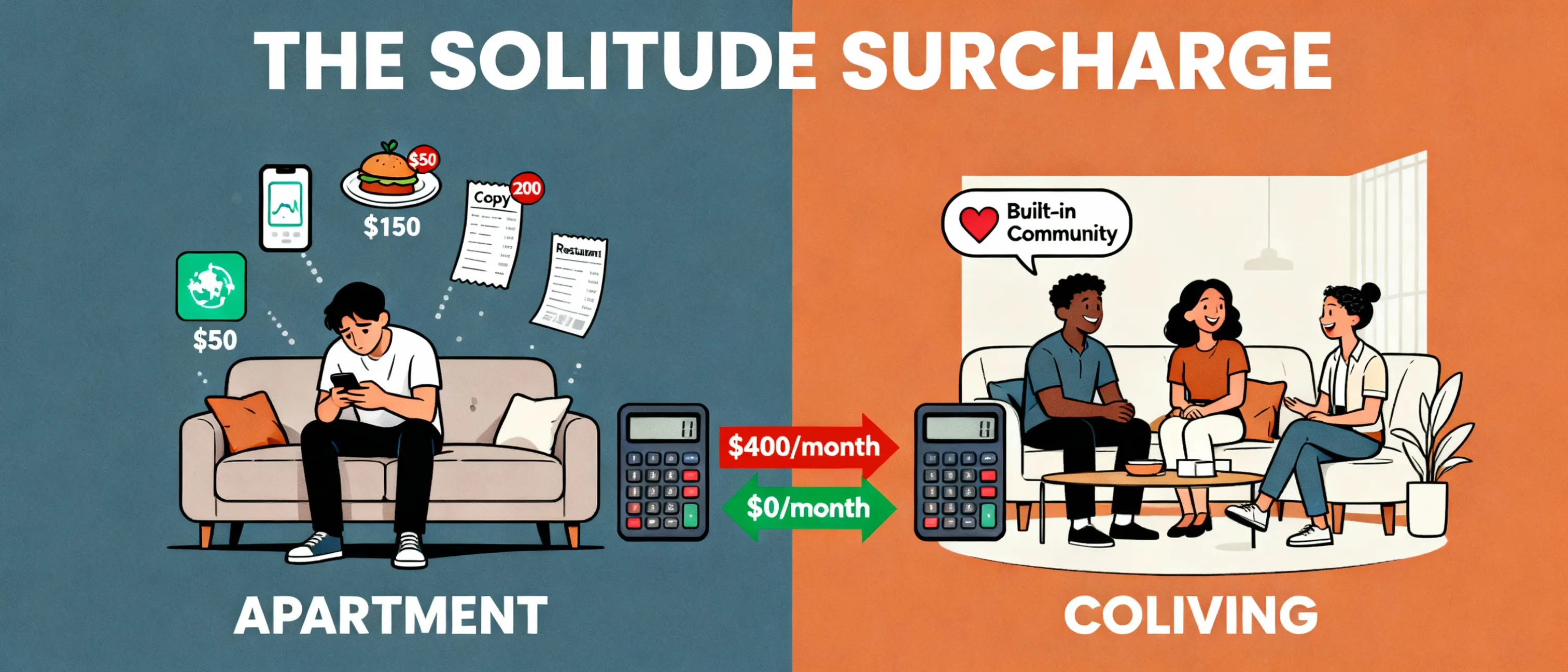
Living alone in a disconnected city often leads to spending on mental health apps, therapy co-pays, or expensive social outings to combat isolation. Coliving's built-in community provides daily micro-interactions and support, effectively eliminating this 'loneliness tax' that can add $200-500 to your monthly invisible budget.
The Set-Up Tax: Hidden Costs of a Traditional Lease
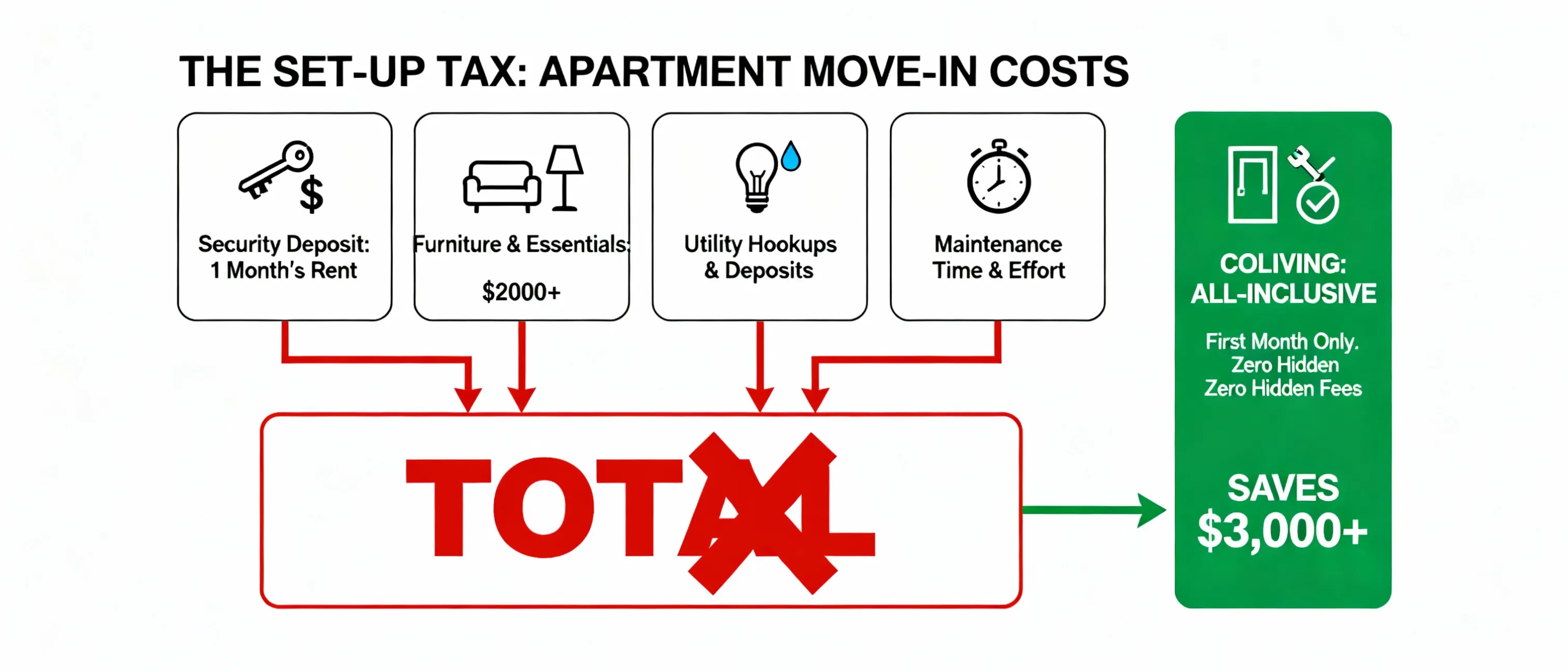
A traditional apartment requires a security deposit (often one month's rent), furniture costs ($2,000+ upfront), utility deposits and hookup fees, and ongoing maintenance time. Coliving's all-inclusive, furnished model has zero move-in costs beyond the first month, turning unpredictable expenses into a single, predictable payment.
The Network Dividend: When Community Boosts Your Bottom Line
Isolation in an apartment limits professional serendipity. Coliving places you in a live network where casual conversations lead to job referrals, freelance gigs, or collaborative projects. This 'accidental networking' can translate to thousands in annual income increase, a financial return not possible in solitary living.
The Alignment Profile
The holistic budgeter who accounts for time, energy, and opportunity costs in their life equation, and seeks to minimize lifestyle friction.
The Misaligned Expectation
The spreadsheet-only comparer who believes housing cost is solely rent + utilities, ignoring the hours lost to admin, the money spent on coping mechanisms, and the income left on the table due to limited networks.
Coliving replaces variable life costs with a fixed community premium. Is your current housing budget missing the line items for loneliness and lost time?